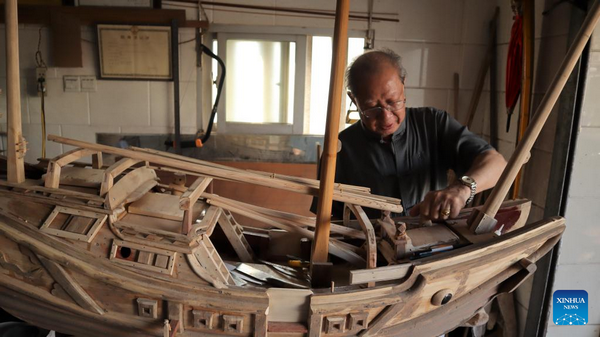
Watertight-bulkhead technology of Chinese junks
Introduction
The watertight-bulkhead technology of Chinese junks stands as a testament to the ingenuity and advanced understanding of maritime engineering by ancient Chinese craftsmen. This pioneering technology was a significant breakthrough in shipbuilding, enabling the construction of seaworthy vessels that could safely navigate the challenging conditions of the open ocean.
Developed during the Tang Dynasty (618-907) and widely embraced in the Song Dynasty (960-1279), this technology allowed junks to be equipped with watertight compartments. These compartments provided a critical safety feature: even if one or two compartments were breached during navigation, the vessel would remain buoyant, significantly reducing the risk of sinking and enhancing the safety of maritime expeditions.
The craftsmanship involved in building these traditional vessels was recognized by UNESCO as an Intangible Cultural Heritage in Need of Urgent Safeguarding in 2010.
Historical Background
The origins of the watertight-bulkhead technology trace back to the Tang Dynasty, a period marked by significant cultural and technological advancements in China. This era saw the birth of many innovations, including the initial development of the watertight-bulkhead technology which would later be refined and extensively applied during the Song Dynasty. During this time, Chinese shipbuilders in the coastal regions of Fujian began to experiment with and perfect the techniques necessary to construct ocean-going vessels capable of withstanding the rigors of long-distance maritime travel.
The watertight-bulkhead technology was not only a technical innovation but also held significant cultural importance. It was a reflection of the advanced maritime culture that flourished in ancient China, a culture that valued innovation, safety, and craftsmanship. The construction of these junks was a community affair, with local populations often participating in solemn ceremonies to pray for the safety and success of the vessels being built.
Technical Aspects of Watertight Bulkhead Technology
Design and Construction
The design and construction of junks employing watertight-bulkhead technology were meticulous processes that required skilled craftsmanship and precise execution. The vessels were primarily constructed using high-quality timber, such as camphor, pine and fir, known for their durability and resistance to water. The key to the watertight compartments lay in the use of joggle joints and rabbet-jointing techniques, which allowed the planks to fit tightly together. The seams were then meticulously caulked using a mixture of ramie, lime and tung oil, creating a seal that prevented water ingress. The construction was typically overseen by a master craftsman who coordinated a team of artisans, each bringing specialized skills to the building process.
Materials Used
The materials used in the construction of these junks were selected for their strength and ability to withstand the harsh marine environment. Camphor, pine and fir were chosen for their excellent structural properties and availability in the region. The use of ramie, a durable natural fiber, in combination with lime and tung oil, was a testament to the ancient Chinese understanding of materials science. These materials not only provided a robust sealant for the seams but also contributed to the overall longevity and durability of the vessels.
Advantages of Watertight Bulkhead Technology
Safety and Stability
The primary advantage of the watertight-bulkhead technology was the enhanced safety and stability it provided to the vessels. By dividing the ship into multiple watertight compartments, the risk of catastrophic flooding was significantly reduced. This meant that even in the event of hull damage, the vessel could remain afloat and return to port for repairs, safeguarding both the crew and the cargo. This feature was particularly valuable during long-distance voyages where the threat of encountering adverse weather or underwater hazards was ever-present.
Longevity and Durability
In addition to safety, the watertight-bulkhead technology contributed to the longevity and durability of the vessels. The careful selection of materials, combined with the skillful construction techniques, resulted in ships that could withstand the wear and tear of extended use. This durability was not only beneficial for the owners and operators of the junks, who could rely on their vessels for many years, but also for the broader maritime economy.
Impact on Maritime Trade
The introduction and development of the watertight-bulkhead technology had a profound impact on naval architecture, influencing shipbuilding practices not only in China but also in other parts of the world. The principles underlying the technology, such as compartmentalization and the use of watertight seals, were adopted and adapted by shipbuilders globally, contributing to the evolution of more advanced and secure vessels.
The enhanced safety and reliability offered by the watertight-bulkhead technology enabled Chinese junks to undertake longer and more ambitious voyages, significantly contributing to the expansion of trade networks. The ability to safely transport goods over long distances facilitated the exchange of not only commodities but also ideas and cultures, enriching the societies involved and fostering a spirit of international cooperation and understanding.
Modern Applications
Despite the decline in the use of wooden junks due to the advent of steel-hulled ships, the principles of watertight-bulkhead technology continue to influence modern shipbuilding. The concept of compartmentalization remains integral to contemporary ship design, ensuring that even in the event of a breach, modern vessels can maintain buoyancy and stability.
Efforts to preserve the knowledge and skills associated with watertight-bulkhead technology are ongoing, with initiatives aimed at safeguarding this important cultural heritage.








